

About R and U
Welcome to "R and U". Guided practice: R and U.
- Level
- Top Row
- Difficulty
- beginner
- Time
- 12 min
- To pass
- 14 WPM · 95%
Why this lesson matters
Solid fundamentals reduce fatigue, prevent repetitive strain, and unlock higher sustained WPM with fewer errors.
How to practise this lesson
Practice r and u using only the keys you have learned. Keep wrists straight, fingers curved, and return to the home row after each reach.
New keys introduced: r, u
Keys used in this lesson: a, s, d, f, g, h, j, k, l, ;, , r, u
Finger placement
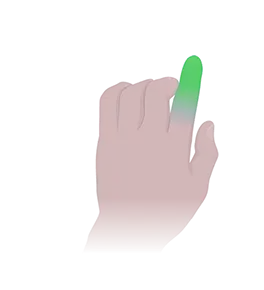
Rest index fingers on F and J (bumps). Other fingers curve over the home row. Move only the finger responsible for each key.
Posture and setup
Screen top at eye level, elbows ~90°, feet flat, keyboard centered with body. Take micro-breaks every 20 minutes.
What you will type
Character drill: r u
Word drill: all had has has had ask far gas jar rag rug sad as us add all ask dad dug far gas had has hug
Sentence drill: ru ur ru ur ru ur fj ru
Common mistakes
- Looking at the keyboard instead of the screen.
- Pressing keys with the wrong finger.
- Holding tension in shoulders or wrists.
Pro tips
- Rhythm matters more than raw speed—keep an even pace.
- Accuracy first; speed follows naturally.
- If you plateau, slow down 10% and focus on zero hesitation.
Accessibility notes
Use Tab to reach controls. Screen reader users: enable reduced motion in OS settings for calmer animations. Increase browser zoom if needed.
Frequently asked questions
- How long should I practice R and U?
- Aim for 10–20 minutes per session, daily if possible. Short focused sessions build muscle memory faster than rare long marathons.
- Can kids use this lesson?
- Yes. TypingOwl lessons are suitable for kids and adults. Younger learners may want a slightly slower target WPM.
- Do I need an account?
- No database is required—your progress is saved in this browser. Clearing site data will reset local progress.